Education
3D models for education
A model students can turn over in their hands, on screen or printed, beats a textbook diagram. Here is where to find good ones and how to let students make their own.
Three-dimensional objects are hard to teach from flat pictures. A rotatable model of a skeleton, an artefact or a molecule lets students explore at their own pace, and a 3D print lets them hold it.
Free, legal models for the classroom
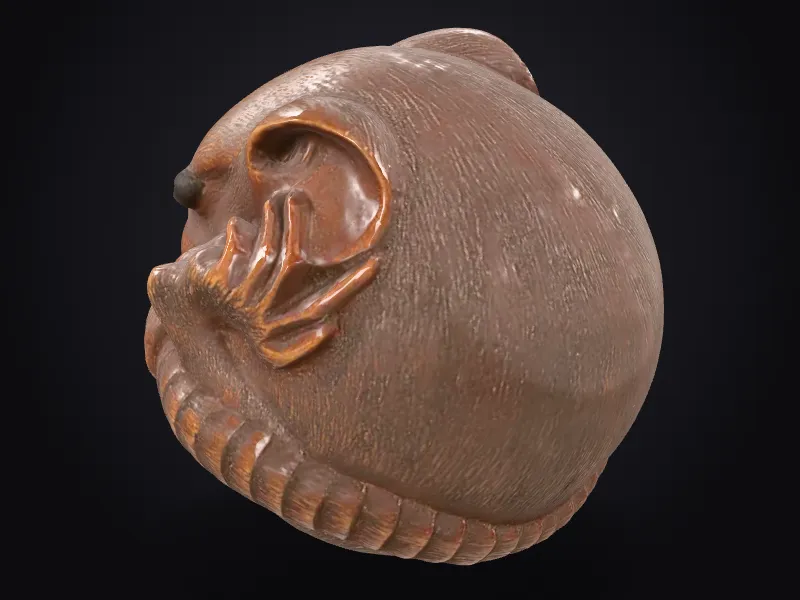
Many museums now release scans of their collections as CC0 (public domain). Our museum and real-world scans include:
- a 19th-century Japanese netsuke of a curled rat from the Minneapolis Institute of Art,
- an antique cash register from a Polish regional museum,
- a Smithsonian Italian side chair,
- and a reassembled, scanned horse skeleton for anatomy and biology.
Every model page has a viewer that works in any browser, with no installs or accounts needed, so the link is all students need.
Students as makers
Making a model teaches more than looking at one. Some ideas:
- History. Photograph an object from home, convert it with image to 3D, and write a museum label for it.
- Art and design. Turn a drawing into a printed relief with the free image to STL tool, which runs in the browser and uploads nothing.
- Language and writing. Write a precise description, generate it with text to 3D, and discuss why the result does or doesn't match.
Practical notes for schools
The free in-browser tools on this site process images on the student's own device, so no photos are uploaded. AI generation requires an account; check your school's policy before students sign up. Always teach licence basics alongside the tools: who made this, and what are we allowed to do with it?
Written with AI assistance and reviewed by the Renderlyst team. Spot something out of date? Email alishbakhalid766@gmail.com.