3D printing
3D models for 3D printing
Turn a logo into a raised plaque, a photo into a lithophane, or a prompt into a figurine. Then check it is watertight and sized before you slice it.
3D printers don't care where a model came from. They care that it is a closed, solid shape (manifold), at the right size, with walls thick enough to print. Generated models can meet all three, but they need checking first.
Three routes from idea to print
- Relief and lithophane. The most reliable route. Our image to STL converter maps brightness to height on a solid base, so the result is always watertight. It's ideal for logos, signs, name plates and backlit photo panels. It runs free in your browser.
- Text to 3D. Good for simple figurines, ornaments and desk toys. Low-poly results print especially cleanly because their faces are large and flat.
- Image to 3D. Reconstructs a full object from a photo. It's great for a figurine of a pet or a toy, but always inspect and repair it before slicing.
Pre-print checklist
- Watertight? Open the STL in your slicer. PrusaSlicer, Bambu Studio and OrcaSlicer all flag and can auto-repair open edges. In Blender, the 3D-Print Toolbox reports non-manifold edges.
- Right size? Mesh units are often unitless, so a model can import at 1 mm or 1 m. Scale it to your target height before slicing.
- Thick enough? On a typical FDM printer with a 0.4 mm nozzle, walls under about 0.8 mm (two lines) tend to fail or vanish. Resin printers can go thinner, but very thin spikes still snap.
- Supports? Overhangs past roughly 45° need support on FDM. Rotating the model often removes most of them.
Lithophanes in one paragraph
A lithophane is a thin panel whose thickness follows an image: thick where the photo is dark, thin where it is light. Printed in white and lit from behind, the photo appears. Use 100% infill, print it standing up for the best detail, and aim for a thickness range of about 0.8 to 3 mm. The lithophane guide has the full settings.
Licences matter for printed objects too
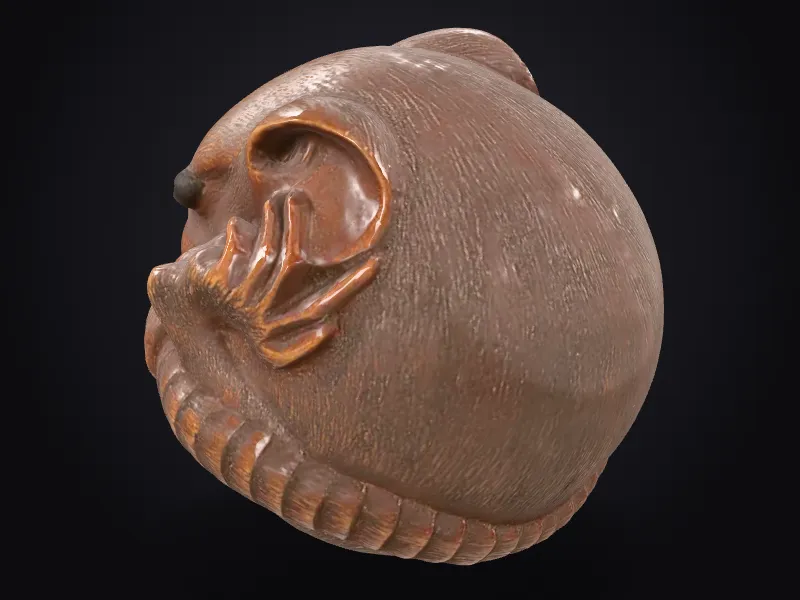
If you print something to sell, check the model's licence. Everything you generate on a paid plan is yours to use commercially. For downloaded models, CC0 has no conditions, and CC BY needs a credit to the author. The museum netsuke scan in our library is CC0 and prints well at its real size of about 38 mm.
Written with AI assistance and reviewed by the Renderlyst team. Spot something out of date? Email alishbakhalid766@gmail.com.